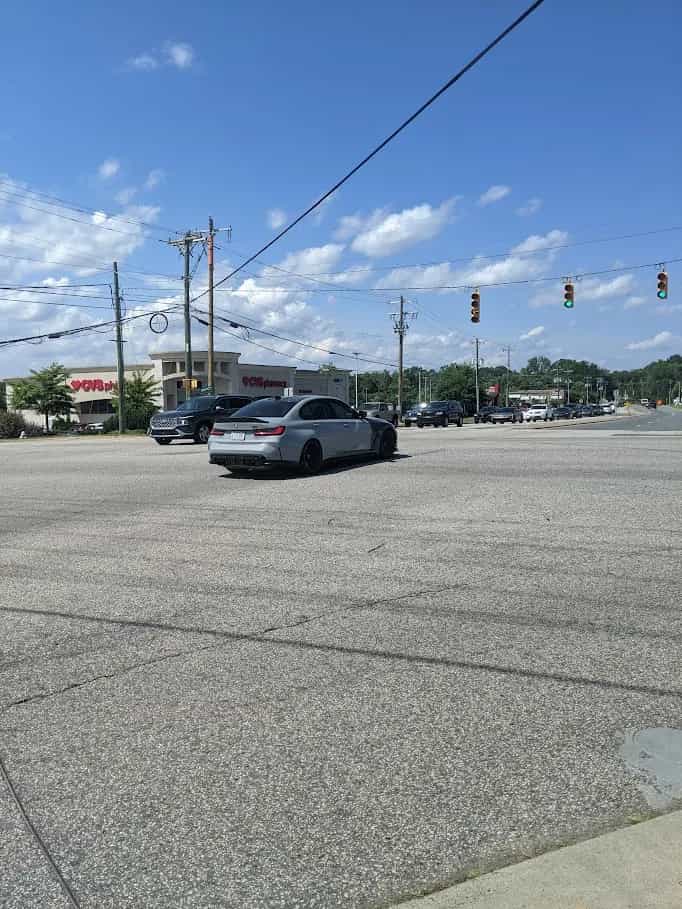
BMW M Series
Importing a used BMW M Series from the USA
The BMW M badge covers a spread of machines rather than a single car, and the American used market is one of the deepest pools of them anywhere. From naturally aspirated M3s to twin-turbo M5 super-saloons, the US bought M cars in large numbers and often in specification you rarely see in Germany. Importing a used BMW M Series from the USA lets you reach cars that were configured for a different buyer — bigger option lists, unusual colour combinations, sometimes lower prices for the same generation. As an independent broker, USCar Trader handles the sourcing, inspection, shipping and paperwork; we never sell new cars and take no hidden margin on the vehicle itself.

Generations at a glance
BMW M began with the M1 and the E28 M5, but the cars US buyers chase today start with the E46 M3 (2001–2006) and its high-revving S54 straight-six. The E90/E92/E93 M3 (2008–2013) is the outlier — the only M3 with a V8, the 4.0-litre S65. The F80 M3 and F82 M4 (2014–2020) switched to the twin-turbo S55 straight-six, and the current G80 M3 and G82 M4 use the S58. On the M5 side, the US saw the V10 E60 (S85), the twin-turbo F10 (S63) and the all-wheel-drive F90. Smaller M cars such as the M2 (F87, then G87) followed. Knowing which chassis code you are buying matters more than the badge, because service history, weak points and parts availability differ sharply between generations.
Powertrain lineup
The American market skews toward automatics and dual-clutch gearboxes, though manual M3, M4 and M2 cars exist and command attention. The S54 (E46 M3) makes around 333 hp and loves revs; the S65 V8 spins to 8,300 rpm and produces roughly 414 hp. Turbo-era engines — S55 and S58 — trade some drama for muscular mid-range torque, with outputs from about 425 to over 500 hp depending on Competition trim. M5 V8s (S63) deliver 560 hp and up. Transmissions include the six-speed manual, the seven-speed M DCT dual-clutch (badged M-DKG in Germany) and, on newer M5/M8, an eight-speed torque-converter automatic. Older M3/M4 are rear-drive; recent M5 and the M3/M4 Competition xDrive add all-wheel drive.
Trims in the US market
Depending on generation you will find sedans (M3, M5), coupés (M4, M2, M8), convertibles, and Gran Coupé four-doors. US-market Competition and Competition xDrive packages raise output and firm up the chassis. Track-focused variants — M3 CS, M4 CS, M2 CS — appear on the used market too. Body style drives usability: an M3 sedan or M5 makes a genuine daily car, while an M2 or M4 leans sportier.
The used market stateside
Supply is strong across California, Texas, Florida and the Northeast. Cars from dry southern states tend to be cleaner underneath, which matters for a chassis that will face German salt. Typical import candidates run from around 30,000 to 90,000 miles; well-kept lower-mileage examples of the E46 and E92 are increasingly collectible. Because M cars are often bought as second or weekend cars in the US, many have full main-dealer history — always confirm it. Avoid heavily tracked or modified cars unless the modifications are documented and reversible.
Who should import one
Importing a used BMW M Series suits the buyer who wants a specific generation, engine or gearbox that is scarce or expensive at home, or who is after a US-only colour or option set. It rewards patience and a careful pre-purchase inspection. If you simply want any fast BMW quickly, local stock is easier; if you want the right one, the American market is where it often lives.
Key specifications
| Attribute | Typical figures (varies by generation) |
|---|---|
| Body styles | Sedan, coupé, convertible, Gran Coupé |
| Engines | S54 3.2 I6, S65 4.0 V8, S55/S58 3.0 twin-turbo I6, S63 4.4 twin-turbo V8 |
| Power output | ~333 hp (E46 M3) to 617 hp (M5 CS) |
| Torque | ~365 to 750 Nm |
| Transmission | 6-speed manual, 7-speed M DCT, 8-speed automatic |
| Drive | Rear-wheel drive; xDrive AWD on recent M5/M3/M4 |
| 0–100 km/h | ~3.0–4.9 s depending on model |
| Top speed | 250 km/h limited (higher with M Driver's Package) |
| Fuel | Premium unleaded (95/98 RON) |
| Seating | 2 (coupé/convertible) to 5 (sedan) |
| Length | ~4.5–5.0 m by model |
| Kerb weight | ~1,500–2,000 kg |
| Fuel tank | ~60–68 litres |
| Emissions class | Euro 4 to Euro 6 by year |
How reliable is it?
Each engine family has its signature issues. The E46 M3's S54 is known for rod-bearing wear and the notorious rear subframe cracking on early cars — check for reinforcement. The E92 S65 V8 shares the rod-bearing concern; a preventive bearing and oil-pump bolt job is a known service item. Turbo S55/S58 engines are generally robust but crank-hub slippage on tuned S55 cars is discussed in the community, so beware modified examples. Across the range, watch the M DCT clutch health, cooling components, and carbon build-up on direct-injection engines. VANOS, high-pressure fuel pumps and worn suspension bushings are typical age-related items. None of this makes an M car fragile, but BMW M Series reliability depends heavily on how the previous owner maintained it — full history is worth more than low mileage.
What US models do differently
US M cars run amber side markers, different headlight beam patterns, mph instrument clusters and no rear fog lamp — all of which the TÜV will flag. Radio frequency spacing and, on older cars, the daytime running lights differ. Equipment lists often diverge: US cars sometimes came with features bundled differently, and heated seats or navigation may be optioned unusually. Mechanically the cars are the same, which keeps approval straightforward.
Seven steps to your import
The process runs: select the car and agree specification; verify the VIN and BMW build/plant data plus a full Carfax or AutoCheck history; place funds in escrow for security; arrange ocean freight (container is safest for an M car) to Bremerhaven or Rotterdam; clear German customs on arrival; complete the TÜV individual approval (Einzelabnahme) with any required modifications; then register the car at your local authority. We coordinate each stage and keep you informed.
Customs, taxes and costs explained
Key point: duty depends on the plant of build; only a VIN check secures the 0% rate. Import VAT of 19% applies regardless.
Two charges are separate. First, the import duty: since 1 July 2026, Regulations (EU) 2026/1455 and 2026/1461 allow a 0% preferential rate for vehicles of provable US origin shipped directly, valid until 31 December 2029. Most M cars are built in Germany, so the standard passenger-car duty is likely to apply — this is why we always check the VIN and plant of build rather than promising a rate. Second, the 19% German import VAT (Einfuhrumsatzsteuer) applies in every case and is calculated on the vehicle value plus freight and duty. We show both line items transparently and add no margin.
German TÜV and registration
Typical changes for German approval include converting to ECE headlights or coding the beam pattern, adding a rear fog lamp, fitting European side indicators, and confirming the speedometer reads in km/h (or is dual-marked). Emissions and noise are checked against the type data. Once the TÜV issues its report, you receive the paperwork needed for registration and German plates.
The buyer checklist
- Decode the VIN and confirm the exact chassis code and build plant.
- Order a full Carfax or AutoCheck report and read the accident and title history.
- Check for rod-bearing service on S54/S65 cars and subframe reinforcement on the E46.
- Inspect the underbody for rust, especially on Northeast and Rust Belt cars.
- Verify complete service records and gearbox/clutch condition.
- Confirm the title is clean, not salvage or rebuilt, unless knowingly buying such a car.
- Have an independent pre-purchase inspection carried out before funds are released.
Questions and answers
Can I import any BMW M model from the USA?
Yes. Whether it is an M2, M3, M4, M5 or M8, we can source and import it as a used vehicle. Availability and price vary by generation.
Will my imported BMW M Series pay 0% customs duty?
Only if US origin is proven by the VIN and plant data. Most M cars are German-built, so the standard duty usually applies. We check every VIN before quoting.
Does the 19% import VAT always apply?
Yes. The German Einfuhrumsatzsteuer of 19% is charged on every private import regardless of the car's origin.
Are US-market M cars mechanically different?
The engines and drivetrains are the same. Differences are mainly lighting, instrumentation and some equipment, all handled during TÜV approval.
Is a manual M3 or M4 available from the US?
Yes, the US kept the manual option on several M models, and these are actively sought. We can search specifically for a manual car.
How long does the whole import take?
From purchase to German plates it typically takes several weeks, driven mainly by ocean freight scheduling and the TÜV appointment.
Should I avoid modified M cars?
Undocumented modifications complicate approval and can hide wear. We prefer standard cars or those with fully documented, reversible changes.
Ready to start? Browse BMW in the Carhub, compare related models such as the BMW M5, the BMW M4 Coupe or the BMW M2 Coupe, or view current M Series listings. USCar Trader guides you from VIN check to registration.